
Tarot & Therapy
Written by Bri Luna
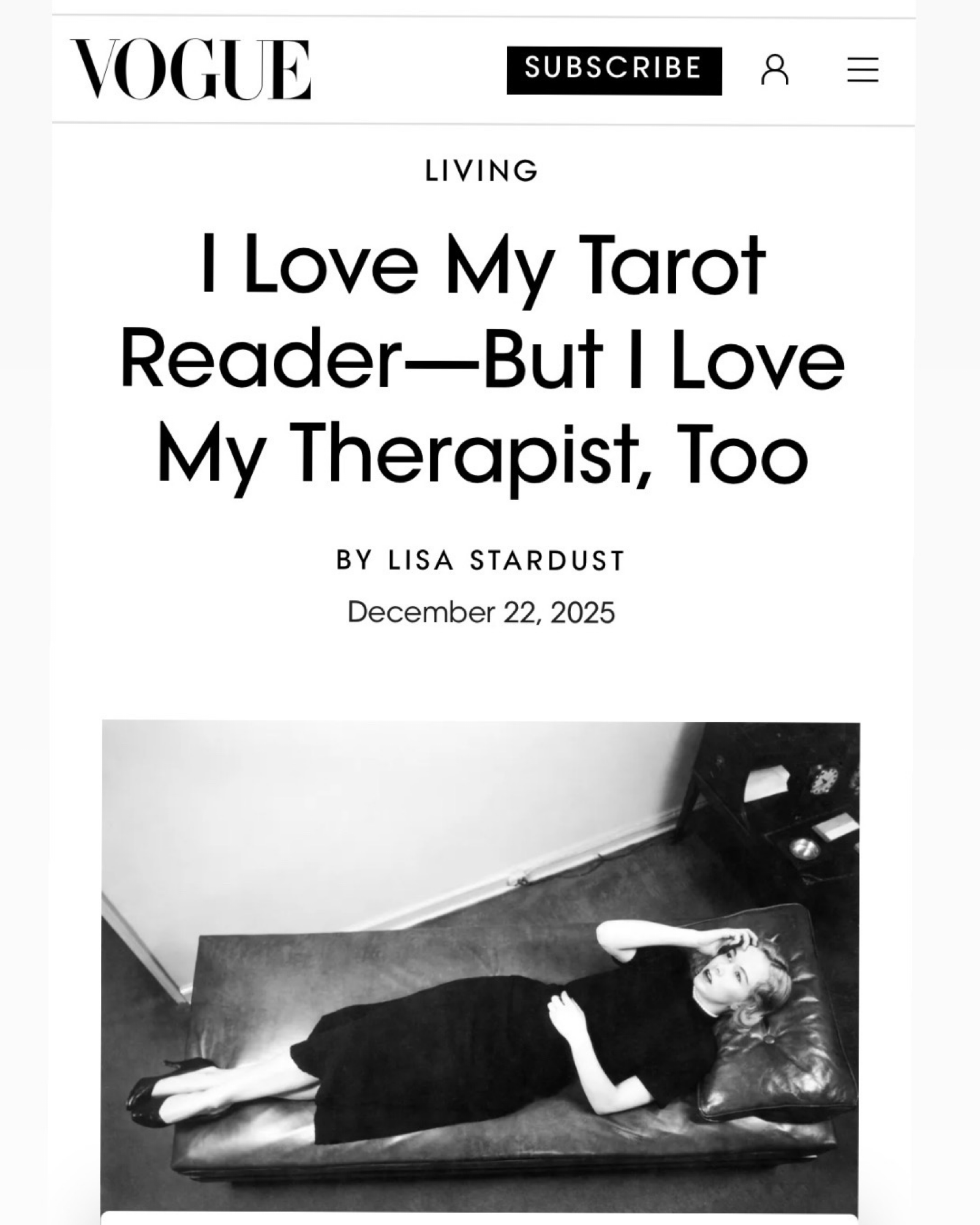
This week, I was featured in a new article for Vogue, written by Lisa Stardust, exploring the relationship between tarot, astrology, and therapy and why more people are turning to symbolic systems alongside traditional mental health support.
The piece centers an idea I’ve spent years articulating in my work: tarot and astrology can be therapeutic without being therapy. They offer insight, pattern recognition, and symbolic language but they are not substitutes for trauma-informed care, crisis support, or long-term mental health treatment.
While a brief quote from my interview appears in the article, much of the nuance didn’t make it into print. So I want to share my full perspective here, because discernment matters! especially right now.
When people ask how tarot or astrology can work with therapy, my answer is simple: They work together when we stop pretending tarot is therapy and stop pretending therapy is the only valid language for self-understanding.
Tarot and astrology help people recognize patterns, cycles, timing, and symbolic meaning. Therapy helps people metabolize that information, understand its roots, and decide how to respond to it in real life.
I often describe it like this:
One tells you the weather. The other teaches you how to dress for it.
In my work, tarot and astrology aren’t about prediction or fantasy. They’re mirrors.
They show people what they’re already doing where they’re repeating patterns, avoiding truths, or standing at a crossroads they don’t want to name yet. If a tool helps someone articulate a fear, a desire, or a pattern they’ve been circling, it’s useful. But the moment tarot becomes a way to avoid responsibility or outsource decision-making it stops being helpful. That’s when it can actually cause harm.
I’ve had tarot readings that were more insightful than therapy sessions.
Tarot and astrology can name patterns quickly. Therapy helps you unpack why those patterns exist and what to do about them. You don’t have to choose one. You choose what actually works for you.
Some people have found more clarity from tarot than from therapists who were culturally disconnected, undertrained, or simply phoning it in. That doesn’t make tarot superior it means the mental health system isn’t one-size-fits-all.
What these conversations really reveal is a gap people are trying to survive not a trend people are blindly following
If a client is relying on tarot to hold untreated trauma, my response is honesty.
Tarot can offer insight, but it cannot ethically hold crisis or unresolved trauma on its own. Many readers are not trauma-informed or trained to navigate those situations, and pretending otherwise is irresponsible.
I encourage people to do both, or at the very least, stay resourced.
Do what helps you heal but stay discerning. Tarot can be therapeutic without being therapy. Some readers are gifted. Others are dangerous and fraudulent! The same is true of therapists. The goal isn’t ideology it’s care, accountability, and choice. If a practice empowers you and doesn’t take your agency away, it has a place. If it replaces responsibility or real support, it doesn’t.